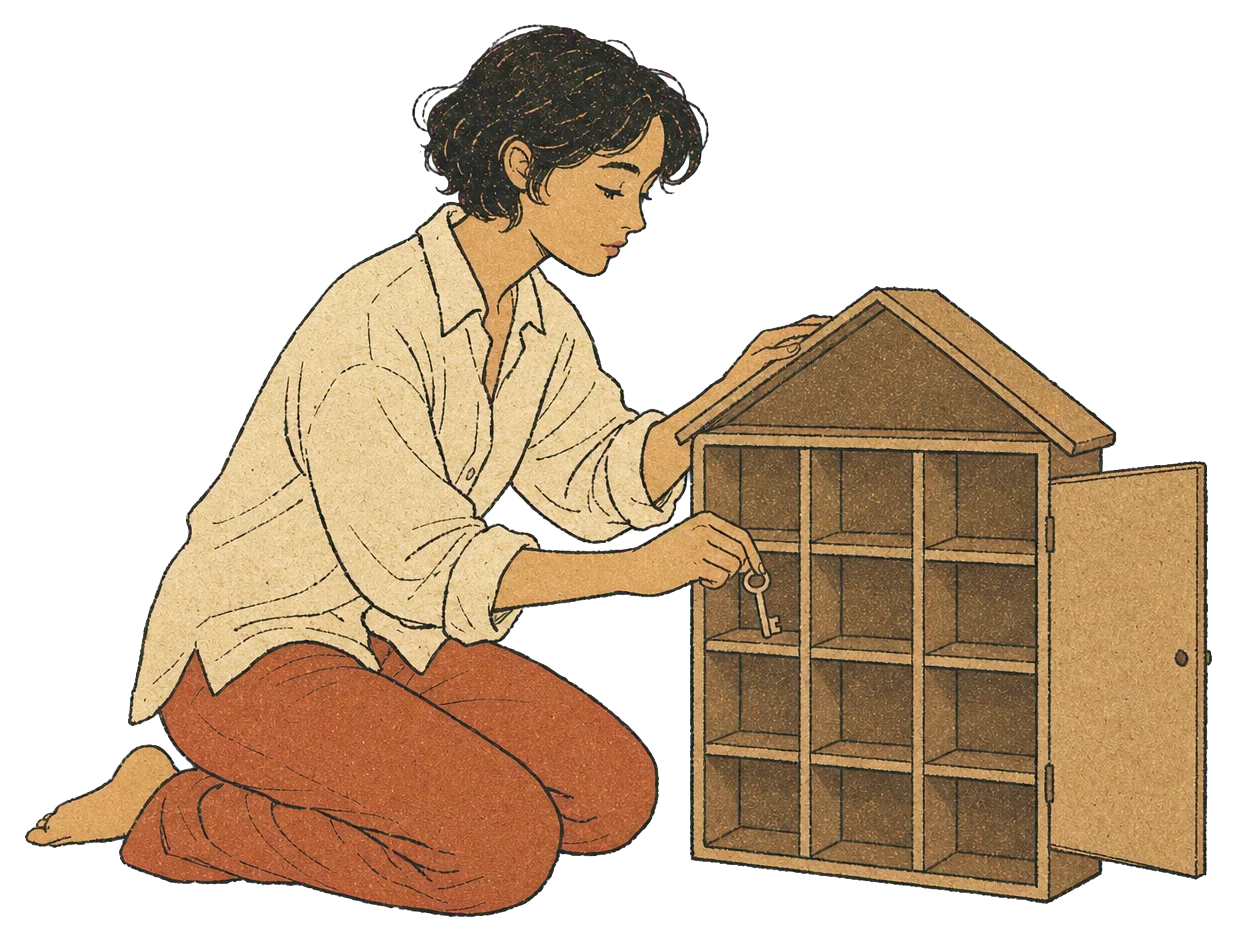
What counts as shared money
More than people expect. Debt of any kind. Tax. Inheritance. Money you pool at home. Capital you put into something run by other people. Any arrangement where it is not obvious who owns what.
The common thread is not the amount. It is that you cannot decide alone. Someone else has a claim, a say, or a schedule you have to meet.
Why it gets emotional so fast
Money that is only yours is a maths problem. Money you share is a relationship, and it brings up dependence, secrecy, control and generosity much faster than your own account ever will.
Your chart can describe that reaction. Somebody with a heavy eighth house often feels the weight of an obligation long before it becomes a real problem, and sometimes when it never does.
None of that changes the contract. The feeling and the terms are two separate things, and only one of them is enforceable.
Write it down
Almost every bad shared-money story comes from something nobody said out loud. Four things are worth putting in writing, even between people who trust each other completely.
| QUESTION | WHY IT MATTERS LATER |
|---|---|
| Who owns what | Contribution and ownership drift apart quickly once money is moving. |
| Who owes what | A loan between friends stops being a loan the moment nobody is counting. |
| What happens if it changes | Arrangements outlive the situation that created them. |
| What happens if one person stops | Illness, a job loss, or a falling out are the cases nobody plans for. |
Assuming is where this goes wrong. Not dishonesty, usually. Just two people who each thought it was obvious.
When the pressure rises
When a planet moves across your eighth house, obligation gets loud. You notice the debt you had stopped thinking about, or you feel the weight of someone depending on you.
That is a good week to reread the terms, and a bad week to sign new ones.
The limit
No placement tells you whether a loan or an investment is right for you. It cannot see the rate, the term, your income, or what else you owe.
Use the chart to spot the pressure. Then read the actual numbers.